



Bcl-xL
Bcl-xL, encoded by BCL2L1, is a major anti-apoptotic member of the BCL-2 family that regulates mitochondrial apoptosis through interactions with pro-apoptotic proteins and preservation of mitochondrial integrity[1][2]. Mechanistically, Bcl-xL suppresses mitochondrial outer membrane permeabilization, limits BAX/BAK activation, and modulates cellular bioenergetics, calcium signaling, and autophagy, linking survival pathways with metabolic adaptation under cellular stress[1][3]. Beyond canonical apoptosis control, Bcl-xL interacts with Beclin-1 and intracellular calcium regulators, including IP3 receptors and VDAC1, thereby influencing autophagy, endoplasmic reticulum-mitochondrial communication, and stress responses[1][4]. In disease models, elevated Bcl-xL expression promotes tumor cell survival, therapeutic resistance, angiogenesis, and metastatic progression across hematologic malignancies and solid tumors, including melanoma and breast cancer[1][5]. Compared with related BCL2L1 splice isoforms, Bcl-xL functions predominantly as a pro-survival protein, whereas the alternatively spliced Bcl-xS isoform exhibits pro-apoptotic activity, highlighting the biological significance of isoform-specific regulation in apoptosis research[2][6]. For experimental applications, Bcl-xL is a validated target of BH3 mimetics and other apoptosis-directed strategies, and its inhibition is widely used to investigate mitochondrial apoptotic priming, drug resistance mechanisms, and cancer cell dependency on anti-apoptotic signaling networks[1][7].
References:
- [1]. Silva JPN, et al. BCL-2 and BCL-xL in Cancer: Regulation, Function, and Therapeutic Targeting. Int J Mol Sci. 2026;27(2):1123.
- [2]. Warren CFA, et al. BCL-2 family isoforms in apoptosis and cancer. Cell Death Dis. 2019 Feb 21;10(3):177. [Content Brief]
- [3]. Li M, et al. Bcl-XL: A multifunctional anti-apoptotic protein. Pharmacol Res. 2020;151:104547.
- [4]. Bcl-xL gene information from NCBI.
- [5]. Kim TJ, et al. Risk of Second Primary Malignancies among Patients with Early Gastric Cancer Exposed to Recurrent Computed Tomography Scans. Cancers (Basel). 2021 Mar 7;13(5):1144. [Content Brief]
- [6]. Chen W, et al. Alternative splicing of BCL-X and implications for treating hematological malignancies. Oncol Lett. 2021;22(4):670. [Content Brief]
- [7]. Campbell KJ, et al. Targeting BCL-2 regulated apoptosis in cancer. Open Biol. 2018;8(5):180002. [Content Brief]
-
Bcl-xL Related Products (123)
Related Products (123)

-
Antibodies (1)
-
YC137
 0 ImagesCat. No.: HY-123244CAS No.: 810659-53-1YC137 is a potent Bcl-2 antagonist with Kis of 1.3 μM and >100 μM for Bcl-2 and Bcl-xL when assayed in Bis-Tris buffer, respectively. YC137 inhibits the binding of the Bid BH3 peptide to Bcl-2, thus disrupting an interaction essential for the antiapoptotic activity of Bcl-2. YC137 selectively induces apoptosis of Bcl-2-dependent cells. YC137 has the potential for breast cancer research.
-
BCL-xL ligand 2
 0 ImagesCat. No.: HY-174878BCL-xL ligand 2 is a ligand for BCL-xL. BCL-xL ligand 2 can be conjugated with E3 ligase Ligand (HY-138793) and linker to synthesize Bcl-xL PROTAC degrader PZ671 (HY-174876).
-
PZ703b hydrochloride
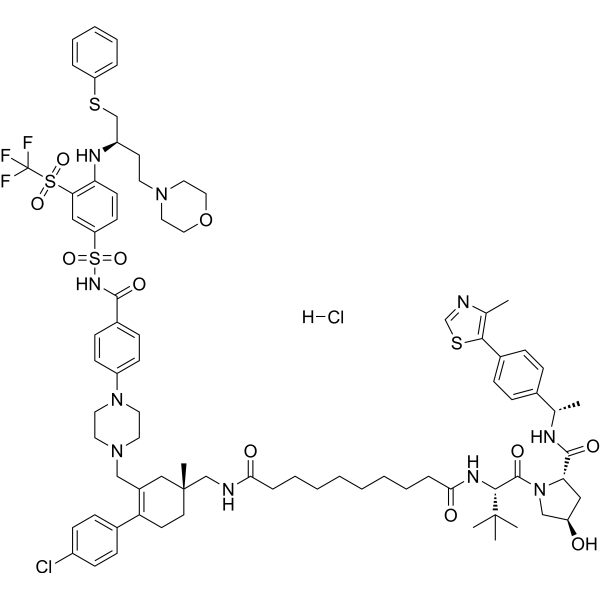 0 ImagesCat. No.: HY-115718BPurity: 99.18%PZ703b hydrochloride is a Bcl-xl PROTAC degrader that induces apoptosis and inhibits cancer cell proliferation. PZ703b hydrochloride can be used for the research of bladder cancer research.
-
Tubulin polymerization-IN-85
 0 ImagesCat. No.: HY-180190Tubulin polymerization-IN-85 (Compound C21) is a tubulin polymerization inhibitor (IC50 = 1.59 μM) targeting the colchicine binding site. Tubulin polymerization-IN-85 can cause cancer cells G2/M phase arrest and induce apoptosis. Tubulin polymerization-IN-85 downregulates the expression of Bcl-2, Bcl-xl, Mcl-1, Cyclin B1, cdc25, cdc2 protein and upregulates P53, P21, Bad and Bax levels. Tubulin polymerization-IN-85 can be used for the research of cancer, such as cervical cancer.
-
Lisaftoclax-d8
 0 ImagesCat. No.: HY-129179SSynonyms: APG-2575-d8; Bcl-2/Bcl-xl inhibitor 1-d8Lisaftoclax-d8 is the deuterated-labeled Lisaftoclax (HY-129179). Lisaftoclax is an orally active, selective BCL-2 inhibitor with a Ki of < 0.1 nM against human BCL-2. Lisaftoclax selectively binds to BCL-2, disrupts the BCL-2:BIM complex, and antagonizes the antiapoptotic function of BCL-2. Lisaftoclax induces BAX/BAK-dependent, caspase-mediated apoptosis, upregulates the pro-death proteins BIM and Noxa, and downregulates mitochondrial respiratory function and ATP production. Lisaftoclax can be used in the research of hematological malignancies including chronic lymphocytic leukemia, multiple myeloma, and diffuse large B-cell lymphoma.

-
Tubulin polymerization-IN-88
 0 ImagesCat. No.: HY-181074Tubulin polymerization-IN-88 is a tubulin inhibitor that blocks tubulin polymerization, leading to microtubule destabilization and disruption of the mitotic spindle. Tubulin polymerization-IN-88 induces G2/M phase arrest and apoptosis in cancer cells, and inhibits cancer cell migration and self-renewal of cancer stem cells. It exhibits in vitro anti-proliferative activity against cancer cells with selectivity over normal cells. Tubulin polymerization-IN-88 also demonstrates in vivo anti-cancer activity without significant toxicity. Tubulin polymerization-IN-88 is applicable for research on glioblastoma, lung cancer, endometrial cancer, ovarian cancer, and leukemia.
-
Apoptosis inducer 50
 0 ImagesCat. No.: HY-179052Apoptosis inducer 50 (Compound 5e) is an apoptosis inducer as well as an autophagy inducer agent. Apoptosis inducer 50 exhibits potent and selective anti-cancer activity against triple-negative breast cancer cells and metastatic colon cancer cells. Apoptosis inducer 50 upregulates the expression of pro-apoptotic proteins (Bax, Bim, cleaved Caspase-9) and downregulates the expression of the anti-apoptotic protein (BCL-XL). Apoptosis inducer 50 upregulates key autophagy markers such as Beclin-1 and ATG5, and enhances the conversion of LC3-I to LC3-II., Apoptosis inducer 50 arrests cancer cells in the G1/S phase by upregulating the expression of p21 and p27 while downregulating Cyclin D1. Apoptosis inducer 50 increases the level of ROS.
-
A-371191
 0 ImagesCat. No.: HY-122275CAS No.: 406228-58-8A-371191 is a selective Bcl-XL antagonist with a Ki <0.5 μM, and also acts as a mitochondria-targeting agent and chemosensitizer. A-371191 restores the sensitivity of cancer cells overexpressing Bcl-XL to Cisplatin (HY-17394) and Doxorubicin (HY-15142A). A-371191 reduces tumor volume in mice with intraperitoneal tumors. A-371191 can be used in the research of acute myeloid leukemia.
-
MAHS-4
 0 ImagesCat. No.: HY-187514MAHS-4 is an inhibitor of thymidylate synthase (TS) and dihydrofolate reductase (DHFR), with IC50 values of 1.918 μM and 83.53 μM, respectively. MAHS-4 inhibits thymidylate biosynthesis, reduces tetrahydrofolate pool maintenance, and interferes with extracellular matrix remodeling. MAHS-4 induces G2/M phase cell cycle arrest, activates endogenous caspase-dependent apoptosis, decreases MMP protein levels, inhibits cell migration, increases intracellular NO levels, and promotes autophagy activity. MAHS-4 is applicable for cancer-related research.
-
PROTAC Bcl-xL degrader-4
 0 ImagesCat. No.: HY-176740CAS No.: 2930759-37-6PROTAC Bcl-xL degrader-4 is a Bcl-xL PROTAC degrader. PROTAC Bcl-xL degrader-4 exhibits cytotoxicity against hepatocellular carcinoma cells, inhibits their migration and colony formation, and shows low cytotoxicity toward normal cells. PROTAC Bcl-xL degrader-4 induces apoptosis by reducing mitochondrial membrane potential and activating the MAPK signaling pathway. PROTAC Bcl-xL degrader-4 significantly suppresses tumor growth in xenograft tumor mouse models. PROTAC Bcl-xL degrader-4 can be used in hepatocellular carcinoma-related research.
-
FI-700
 0 ImagesCat. No.: HY-111268CAS No.: 866883-79-6FI-700 is an orally active FLT3 inhibitor with an IC50 of 20 nM. FI-700 induces G1 phase cell cycle arrest by inhibiting autophosphorylation of mutant FLT3 and the downstream STAT5/MAPK pathway. FI-700 triggers the mitochondrial apoptosis pathway by downregulating anti-apoptotic proteins Mcl-1 and Bcl-XL, altering the conformation of Bax, and activating caspase-3. FI-700 can be used in research related to acute myeloid leukemia.
-
ASO-4625
 0 ImagesCat. No.: HY-188136ASO-4625 is a 20-nucleotide gapmer antisense oligonucleotide with a full phosphorothioate backbone and 2'-O-(2-methoxy) ethyl ribose modifications, which targets BCL2 mRNA and BCL2L1 mRNA. ASO-4625 downregulates Bcl-2 expression via an RNase H-dependent antisense mechanism with 100% complementarity, and downregulates Bcl-xL expression via the same mechanism with three mismatches. ASO-4625 induces Apoptosis and acts as a chemosensitizer. ASO-4625 does not significantly modulate the expression of Bcl-W, survivin, Akt, or p53 mRNA. ASO-4625 can be used in studies of breast cancer and non-small cell lung cancer.
-
(-)BI97D6
 0 ImagesCat. No.: HY-115529CAS No.: 1430067-36-9(-)BI97D6 is a broad-spectrum inhibitor of the Bcl-2 protein family, inhibiting Mcl-1, Bcl-2, Bcl-xL and Bcl-1 with IC50 values of 0.025, 0.031, 0.076 and 0.122 μM, respectively. (-)BI97D6 stimulates cell death through the Bak and Bax mediated mitochondrial apoptosis pathway. In addition, (-)BI97D6 inhibits Mcl-1 and can effectively induce apoptosis in acute myeloid leukemia (AML) cells.
-
Sphingosine
 0 ImagesCat. No.: HY-165550CAS No.: 134053-67-1Synonyms: C22-D-erythro-SphingosineSphingosine (C22-D-erythro-Sphingosine) is a metabolite of sphingolipid and a pro-Apoptotic signaling messenger. Sphingosine induces apoptosis via Caspase-dependent, mitochondria-dependent and lysosomal affinity detergent pathways, downregulates Bcl-2 and Bcl-xL, and truncates Bid and Bax. Sphingosine is used for cancer research.
-
ASO-5005
 0 ImagesCat. No.: HY-188137ASO-5005 is a 20-mer Gapmer antisense oligonucleotide modified with locked nucleic acids (LNA), featuring a full phosphorothioate backbone, which targets BCL2 mRNA and BCL2L1 mRNA. ASO-5005 downregulates Bcl-2 expression via an RNase H-dependent mechanism, with its sequence fully complementary to BCL2 mRNA; it simultaneously downregulates Bcl-xL expression via an RNase H-dependent mechanism, with three mismatches between its sequence and BCL2L1 mRNA, while LNA modification enhances its activity against this mismatched target. ASO-5005 induces Apoptosis by activating Caspase-3 and cleaving ICAD. ASO-5005 does not significantly regulate the expression of Bcl-W, Survivin, Akt, or p53 in tumor cells. ASO-5005 can be used for research on breast cancer and non-small cell lung cancer.
-
N-Hydroxyphthalimide (Standard)
 0 ImagesN-Hydroxyphthalimide (Standard) is the analytical standard of N-Hydroxyphthalimide (HY-Y0396). This product is intended for research and analytical applications. N-Hydroxyphthalimide is a blocking agent and catalyst. N-Hydroxyphthalimide promotes oxidation reactions by generating PINO free radicals and activating hydrogen atom transfer processes. N-Hydroxyphthalimide reduces the expression of anti-apoptotic proteins Survivin and Bcl-xL and activates caspase 9 and caspase 3. N-Hydroxyphthalimide induces Apoptosis. N-Hydroxyphthalimide inhibits the phosphorylation of mTOR (Ser2448, Ser2481) and Akt (Ser473). N-Hydroxyphthalimide has anticancer effects against breast and colon cancer.
-
Sorafenib tosylate (Standard)
 0 ImagesSynonyms: Bay 43-9006 tosylate (Standard)Sorafenib (tosylate) (Standard) (Bay 43-9006 (tosylate) (Standard)) is the analytical standard of Sorafenib (tosylate) (HY-10201A). This product is intended for research and analytical applications. Sorafenib (Bay 43-9006) tosylate is a potent oral active multikinase inhibitor. Sorafenib blocks autophosphorylation and activity of receptor tyrosine kinases (VEGFR-2, VEGFR-3) and RAF family kinases, thereby suppressing the RAF/MEK/ERK and PI3K/Akt pathways, inhibiting STAT3 phosphorylation, and selectively inhibiting the MAPK pathway in cancer cells. Sorafenib tosylate induces cell cycle arrest, autophagy, apoptosis, and PARP cleavage, reduces Bcl-2, Bcl-XL, cyclin D1 levels, and activates Bak and Bax. Sorafenib tosylate inhibits tumor growth and metastasis in mouse and rat models. Sorafenib tosylate can be used for cancer research, such as colon, breast, non-small-cell lung cancer (NSCLC), ovarian, pancreatic, melanoma, colorectal and hepatocellular carcinoma.
-
Acanthoic acid
 0 ImagesCat. No.: HY-116136CAS No.: 119290-87-8Synonyms: NP1302Acanthoic acid (NP1302) is an orally active pimarane-type diterpenoid. Acanthoic acid is isolated from the root bark of Araliaceae family plant Eleutherococcus senticosus (Siberian ginseng). Acanthoic acid activates LXR and FXR. Acanthoic acid activates the AMPK-LKB1, SIRT1, and p38 MAPK signaling pathways and increases the phosphorylation level of ACC. Acanthoic acid downregulates the expression of SREBP-1, CYP2E1, HIF-1α, and PPARγ, and upregulates the expression of PPARα. Acanthoic acid induces Apoptosis by activating Caspase-3, promoting PARP cleavage, and downregulating Bcl-xL. Acanthoic acid exhibits antioxidant, anti-fibrotic, and hepatoprotective effects. It reduces lipid accumulation and lipogenesis. Acanthoic acid is used in studies on non-alcoholic fatty liver disease, alcoholic liver disease, acute promyelocytic leukemia, and Acetaminophen-induced hepatotoxicity.




